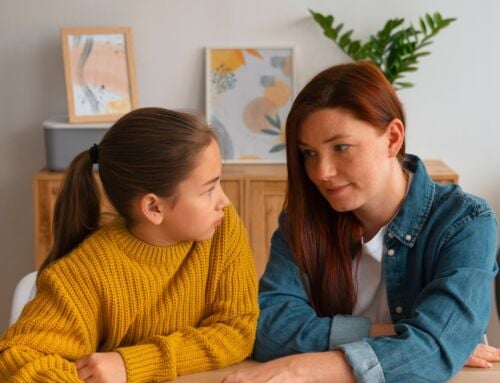


When people hear “Behaviour Support,” they often picture something clinical, formal, or something only used when things have gone very wrong. But the reality is much simpler. Behaviour Support is about understanding why behaviour happens, supporting wellbeing, and creating environments where people feel safe enough to be themselves.
Before I talk about what Behaviour Support is, it helps to clarify a few words that come up a lot in this space — because I know these terms aren’t everyday language.
A quick (and very human) guide to neurotype language
Neurodiversity
The idea that all brains think, learn, and process differently — and that this variation is normal.
Neurotype
Your neurotype is simply the way your brain works. It’s not a diagnosis. It’s your processing style, communication style, sensory world, and how you experience life.
Neurodivergent
Someone whose brain processes the world differently to what society calls “typical.”
This can include autism, ADHD, dyslexia, dyspraxia, Tourette’s, intellectual disability, and more.
Neurotypical
Someone whose brain works in a way society often expects — which doesn’t make it better, just different.
Understanding this helps make sense of why two children can be in the exact same situation, but one becomes overwhelmed and the other carries on unfazed. It’s not that one is “better behaved.” They just have different sensory systems, stress thresholds, and supports. This is where Behaviour Support becomes so important.
Why Behaviour Support matters (and why I love it)
If you know me, you know I’m mildly obsessed with Carl Rogers — specifically his belief in unconditional positive regard.
Rogers believed people grow best when they feel understood, not judged. That is the heart of neuro-affirming Behaviour Support.
Instead of trying to “fix” behaviour, we ask:
What is this behaviour communicating? What does this person need?
This matches current research showing that respecting someone’s neurotype — rather than trying to normalise them — leads to better wellbeing, stronger relationships, and more meaningful progress (Flower et al., 2025; Wagland et al., 2025).
So… what actually is Behaviour Support?
Behaviour Support is:
- understanding a person’s world
- reducing stressors
- supporting communication
- creating predictability
- building co-regulation
- helping families and teams work with the person
- making environments safer and more accessible
It is not:
- compliance training
- discipline
- punishment
- “fixing” neurodivergent traits
- stopping behaviours simply because they’re inconvenient
Behaviour Support is ultimately about quality of life — how someone feels, how they connect, and how safe their world is.
Misconceptions about behaviour (and why they don’t match real children)
A lot of mainstream ideas about behaviour come from a place of misunderstanding. Here are some common ones I hear all the time:
❌ “He’s choosing to misbehave.”
Children rarely “choose” distress. Most behaviour is communication.
❌ “She just needs more discipline.”
If discipline worked, the behaviour would have stopped already.
Connection and support work better than consequences.
❌ “Other kids don’t react like that — so why does she?”
Because all brains are different. Some kids are naturally more resilient, more sensory-seeking, less anxious, or less impacted by uncertainty.
Others feel things deeply, lose safety quicker, or have nervous systems that reach overwhelm faster.
These differences aren’t flaws. They’re neurotypes.
❌ “He’s attention-seeking.”
Children seek connection, not attention. A connection-seeking child is a child trying to feel safe.
❌ “She’s being dramatic.”
She’s communicating distress in the only way her nervous system can manage in the moment.

Research consistently shows that language which frames behaviour as intentional “defiance” increases stigma and misinterpretation (Gernsbacher, 2017). Neuro-affirming practice asks us to look deeper.
A neuro-affirming view of behaviour
A neuro-affirming approach recognises that:
- children aren’t “good” or “bad”
- some have more visible distress responses
- some mask their overwhelm until they hit breaking point
- some avoid, some run, some yell, some shut down
- all behaviour tells us something
When we interpret behaviour through a neuro-affirming lens, we shift from judgment to curiosity.
Instead of saying, “He’s non-compliant,” we say, “He’s overwhelmed, unsure, or not feeling safe right now.”
Instead of, “She has challenging behaviours,” we think, “Her behaviours are showing us where she needs support.”
This shift is backed by current research advocating for neurodiversity-affirming support that respects identity, reduces shame, and prioritises wellbeing (Affirming Neurodiversity within ABA, 2024).
What Behaviour Support looks like in everyday life
Most Behaviour Support doesn’t look like a formal session.
It looks like the small, everyday moments where children feel seen:
- giving extra processing time
- reducing sensory load
- explaining changes before they happen
- following a child’s interests
- co-regulating instead of demanding calm
- noticing early signs of overwhelm
- giving choices instead of instructions
- celebrating self-advocacy (including saying “no”)
These aren’t behaviour strategies — they’re relationship strategies.
And relationship is the foundation of behaviour.
When safety increases, capacity increases.
When capacity increases, behaviour naturally changes.
Bringing it all together
Behaviour Support isn’t about controlling behaviour. It’s about understanding it.
It’s about recognising that all children — neurodivergent and neurotypical — have different thresholds, communication styles, and stress responses.
Some are naturally more resilient.
Some feel things more intensely.
Some can push through discomfort.
Some can’t.
And all of it makes sense when you understand their neurotype and their world.
A neuro-affirming Behaviour Support approach allows children to feel understood, not judged — which is exactly what Carl Rogers meant when he said people grow best when they feel accepted for who they are.
At the end of the day:
Behaviour Support should feel human.
Supportive, curious, compassionate, and grounded in dignity.


Gabby offers NDIS Behaviour Support at our Warners Bay, Tuggerah and Cessnock clinics.
Contact us today to book an appointment or find out more about how we can support you or your family.
References
Affirming neurodiversity within applied behavior analysis. (2024). Behavior Analysis in Practice. https://doi.org/10.1007/s40617-024-00907-3
Flower, R. L., Benn, R., Bury, S., Camin, M., Muggleton, J., Richardson, E. K., & Jellett, R. (2025). Defining neurodiversity-affirming psychology practice for autistic adults: A Delphi study. Autism in Adulthood.
Gernsbacher, M. A. (2017). Editorial perspective: The use of person-first language in scholarly writing may accentuate stigma. Journal of Child Psychology and Psychiatry, 58(7), 859–861.
Wagland, Z., Sterman, J., Scott-Cole, L., Spassiani, N., & Njelesani, J. (2025). Promoting neurodiversity-affirming care for autistic children: A scoping review. Journal of Autism and Developmental Support.
Rogers, C. R. (1961). On becoming a person: A therapist’s view of psychotherapy. Houghton-Mifflin.